MERCURI-1 — MEtabolic and Renal outcomes in Cardiac sUrgery patients Receiving SGLT2 Inhibitors
A pilot randomised controlled trial testing whether the SGLT2 inhibitor empagliflozin — a diabetes medication with signals of kidney protection — reduces acute kidney injury after elective cardiac surgery.
Registered at onderzoekmetmensen.nl, trial 26563. Results available as a preprint on medRxiv.
The problem
Cardiac surgery often leads to acute kidney injury (AKI), with no current effective prevention. We tested whether SGLT2 inhibitors, typically used for diabetes, could reduce this risk.
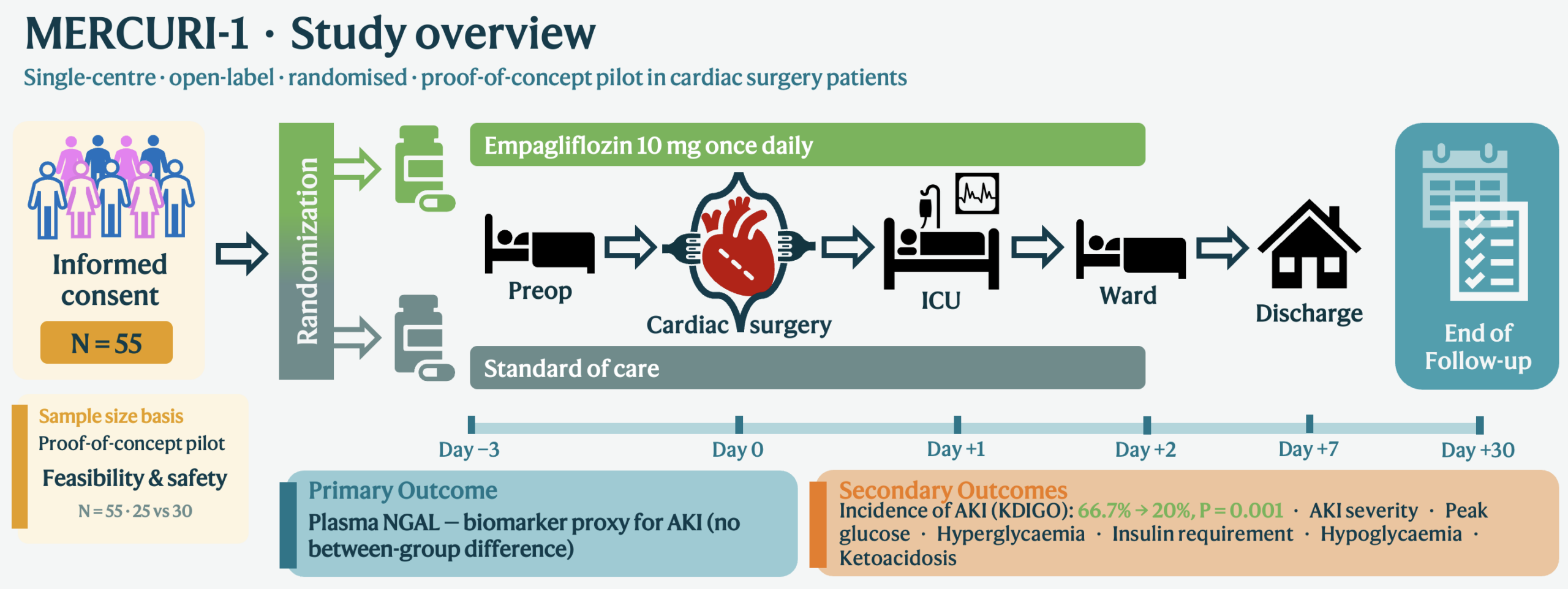
Design & result
60 patients undergoing elective heart surgery were randomly assigned to receive either the SGLT2 inhibitor empagliflozin or standard care. The empagliflozin group received the medication three days before and two days after surgery. Results showed a significantly lower rate of AKI in the empagliflozin group (20%) compared to the control group (66.7%), with no significant differences in side effects between the groups. This suggested empagliflozin could help prevent AKI in heart surgery patients, warranting further research — the basis for the confirmatory MERCURI-2 trial.
Data & transparency
In compliance with the principles of open-access data sharing of research data — enabling the reuse of results and supporting transparency and reproducibility, building trust in science — a deidentified individual-level research database for MERCURI-1 is available: Download the dataset.
Where this leads
MERCURI-1’s signal led directly to the larger, confirmatory MERCURI-2 trial. The line now continues with MERCURI-3, which asks a related but distinct question: whether patients already taking an SGLT2 inhibitor should continue it through cardiac surgery.