Perioperative Organ Protection Research Programme
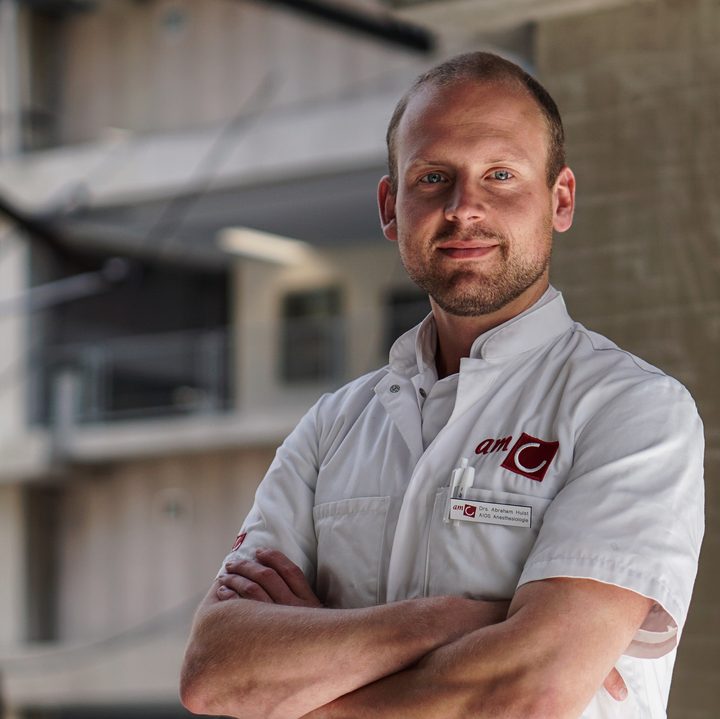
I’m Abraham Hulst — Bram to most who know me — an anaesthesiologist and clinician-scientist at Amsterdam UMC. My research integrates a set of related interests: how the physiological stress of surgery and critical illness injures the kidney and other vital organs, and how the interactions of metabolism, endocrinology, and normal physiology shape that injury. The aim throughout is to understand these underlying mechanisms and find new ways to optimise postoperative outcomes and the long-term health of our patients.
Find your way in
The same research, told at the depth you need — whether you’re a patient, a colleague at the bedside, or a fellow researcher.
For patients & the curious
What actually happens to your body during surgery or a stay in intensive care — and the research trying to make it safer. Plain language, no jargon.
Read the explainers → 02For clinicians
Practical, evidence-based guidance on perioperative diabetes and metabolic drugs — SGLT2 inhibitors and GLP-1 agonists — drawn from my BJA Education work and protocols.
See clinical resources → 03For researchers
Two connected research lines — kidney protection and metabolism — carried from translational mechanism and biomarkers through to multicentre randomised trials.
Enter the research →MERCURI — can we protect the kidney during major surgery?
Acute kidney injury is one of the most common serious complications after major surgery, and there is still no proven way to prevent it. The MERCURI programme works from mechanism to trial: using urinary oxygenation as a real-time window on the kidney, testing SGLT2 inhibitors and ketone metabolism as protective strategies, and running the multicentre randomised trials that show whether they work. The longer goal is to follow patients beyond the operating theatre — because it is the long-term outcomes, chief among them chronic kidney disease, that matter most.